
Ensuring the safety of all staff and pupils on the premises in Education is a critical challenge when facing dangers such as intrusions, fire, extreme weather conditions or a health crisis. As a result, managers are called to anticipate this range of incidents and implement security actions and suitable tools to promote prevention in schools and ensure the safety of its occupants, for which they are responsible.
What you need to know about this guide:
- Compliance: This guide outlines key safety principles and practical measures to help education settings align with evolving security standards and regulatory expectations worldwide.
- Methodology:: Effective safety is based on 4 pillars: identification, anticipation, equipment and training.
- Technology: The alert should be immediate, audible and visual to guarantee the inclusion of all the occupants (students and staff).
- Safety measures: Annual drills and reports are essential to validate the measures implemented.

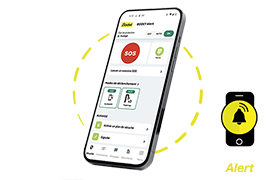
Asegure el cumplimiento de su instalación con planes de seguridad
Adopte una solución de activación certificada que garantiza la seguridad inmediata de sus ocupantes.
For example, Martyn’s Law has been implemented in the UK to ensure that the public are better protected from terrorism, by requiring some public facilities and events to be prepared and keep people safe. Following the royal assent in April 2025, premises and business will be given time and support to understand their new obligations, implement new measures, and define a responsible person.
Since safety plans are to be implemented in any educational setting, it is important to be prepared, by being equipped with suitable tools, such as PA systems, clocks and access systems. As a result, implementing appropriate, efficient organisation suitable to your facility and its size allows for a quick response in case of a threat. It provides guidance on how to react according to the incident, in order to ensure staff and pupil safety.
This practical guide details the 4 key steps to follow to guarantee compliance for your school to safety requirements. From risk identification to technological equipment, follow this structured guide to ensure optimum safety to your students and staff.
Step 1: Identifying major risks specific to the school
In recent years, schools worldwide have seen a rise in safety and security incidents. From everyday risks such as unauthorised access and student violence to more critical threats, ensuring a safe environment has become a top priority Within all types of school settings, different risks can be identified:
- Natural disasters: floods, storms
- Technological incidents: explosions, cyberattacks
- Human-induced incidents: intrusions, attacks, acts of violence, individual assaults
Natural disasters
These are “exceptional” situations, but their likelihood is evolving. Indeed, climate change has altered the risk of some types of extreme weather, with evidence that the frequency and intensity of storms, floods, and heat waves are likely to increase in the future. This evolving risk landscape requires schools to be prepared, particularly through early warning systems and clear communication protocols.
Technological and industrial incidents
These are related to equipment, technical installations or activities using technology. For example, there can be dangers of electric shock or a short circuit, relating to faulty electric installations or improper use of electrical appliances, that could result in a fire.
Chemical incidents can also occur in some schools located near high-hazard industrial sites, thus causing toxic fumes and requiring a lockdown procedure as well as the triggering of a lockdown alert. Eventually, digital and technological threats are more and more considered within educational settings; it is then important to raise awareness of cyberattacks, and the malfunction of IT systems.
Human-induced incidents
They are considered as “exceptional”, but can be extremely serious. These last few years, we are facing an increase in human-induced accidents, ranging from intrusions and acts of violence to more severe attacks. These events, while being relatively rare, highlight the vulnerability of education environments and the need for increased vigilance. Several countries across Europe and North America have reported cases of unauthorised access to school premises and violent incidents involving students or external individuals. Unfortunately, this is only an example among many.
In response, governments and international organisations have developed comprehensive security frameworks aimed at protecting public facilities, including schools. These approaches generally focus on prevention, threat detection, physical protection, and effective emergency response, with the goal of reducing risks and limiting the impact of potential incidents. Such approaches can then be implemented through the use of access control, increased surveillance, safety and lockdown systems if required. Every emergency plan is specific to each facility and aims at ensuring student and staff safety, to prevent the above-mentioned risks. Therefore, prior analysis of different school incidents and likelihood can be used to create your own safety plan.
Step 2: Anticipating compliance with regulatory obligations
All schools have legal obligations in terms of safety. In fact, headteachers are held liable in case of incident. Faced with the increase of incidents of all types, but especially of major risks, many governments and security agencies use threat level systems to assess and communicate the likelihood of incidents. These systems usually consist in using graduated levels - ranging from low to critical - to help facilities adapt their safety measures accordingly. By aligning their safety strategies with these risk levels, schools can better anticipate potential threats and implement proportionate measures to protect their staff and pupils.
Besides, as part of the safety plan, it is also important to specify the configuration of buildings, the number of total occupants, the flow of entries and exits, the different access for emergency services, as well as the areas dedicated to lockdown and evacuation, through the creation of a practical guide. The documentation must clearly identify the individuals referred to as the “named person responsible”, as well as the different instructions according to the risk identified.
Then, this guide can be implemented through the use of safety equipment, in order to ensure full compliance with safety requirements. Indeed, in case of non-compliance, financial, administrative and even criminal sanctions might be applied.
Step 3: Being equipped with appropriate tools to realise the guide and ensure safety
Headteachers can be equipped with alert systems to implement their plan. Some of them are equipped with lockdown alert systems; that is to say, PA and visual systems to be installed in strategic areas of their school to inform all occupants of an incident in progress. To help schools comply with safety requirements, Bodet Time has designed PA and alert systems such as the Harmonys and the Melodys range. These IP-based or radio-synchronised devices allow for intrusion alerts, announcements or pre-recorded messages to be broadcasted.
For hearing-impaired individuals, these devices can display luminous strobes or text to inform of an ongoing event. Indeed, it is important to use inclusive solutions enabling all individuals present in the premises to be informed. Town halls are important stakeholders in the education sector, since they often have access to the information of different schools located in the same sector. As a result, when an alert is triggered, they can centralise the lockdown alerts triggered in one or several schools. Harmonys Multisite is the alert software from Bodet Time, which enables you to visualise all of the premises to be monitored on a map, to control the management of alerts and communicate directly and effectively.
Step 4: Raising awareness and testing the system
Once the safety plan has been implemented and communicated to the relevant individuals, the headteacher should conduct annual drills, separate from fire drills, in accordance with recognised fire safety standards (such as BS 5839 in the UK, or ISO and NFPA standards internationally). In fact, it is important to raise student awareness on safety and security issues by implementing real-life drills.
These drills can take different forms according to the risks identified: for example, a lockdown drill simulates the presence of a malicious individual near the school, requiring both students and staff to adopt a lockdown position and safe place, or a lockdown drill in case of industrial risk for schools located near high-hazard industrial sites, requiring doors and windows to be closed, ventilation systems to be switched off, and all occupants to be gathered in dedicated rooms. In general, educational institutions should use these drills to create a report enabling the system to be improved, and make corrective measures if required.
Implementing a safety plan then constitutes a regulatory element of individual’s safety within a school. By identifying risks, defining clear procedures and involving all stakeholders, this document allows for anticipation of emergency situations and limitation of their consequences. An effective procedure lies on careful preparation, suitable communication and regular updates, to ensure optimum levels of safety both for students and the staff. Such updates can occur as part of work carried out within the facility, requiring evacuation plans to be updated, lockdown areas to be redefined, or as part of a change in the school’s management, involving a change in the crisis organisational chart, or as part of a drill report, justifying the modification of the alert signal.
Safety best practices
Headteachers should define a dedicated person, that will have the appropriate documentation and participate in information or update meetings so that information is transmitted and understood by everyone. The safety plan should clearly define instructions to be observed depending on the type of alert (lockdown, malicious intrusion, etc). Indeed, locations and equipment will not be the same depending on the incident faced.
As a result, dedicated people should communicate to all occupants of the facility easy, precise actions to carry out. For example, in the event of a malicious intrusion, dedicated people are required to trigger an intrusion alarm, and all occupants should confine themselves by closing doors and windows, and hiding under the tables.
For over 50 years, Bodet Time has been the leader in time management within schools. Since 2006, Bodet Time has been offering solutions to ensure the safety of school occupants, and has already equipped over 20,000 establishments worldwide.
